USELESS UNTIL NEEDED · STORM-SEASON FIELD REPORT
The lights are out. The phone is silent. This is still talking.
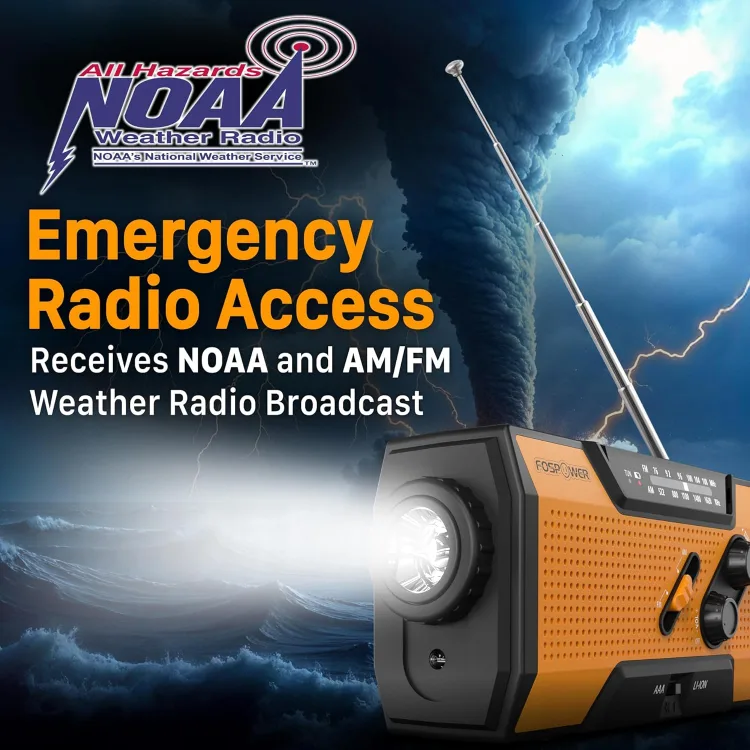
In a real outage the frightening part is not the dark — it is the not knowing. The power is gone, the cell network is congested, and nobody in the house can say whether the thing outside is getting worse. The FosPower NOAA Emergency Weather Radio is the one channel that depends on nothing you own: a broadcast, still coming in, in your hand.
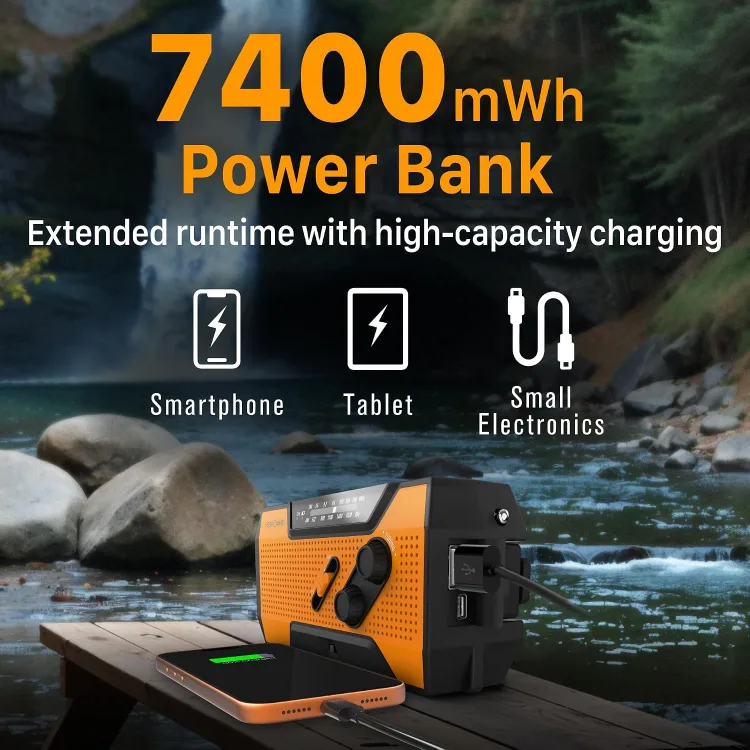
AM/FM + NOAA weather band · USB, solar, and hand-crank charging, plus AAA backup · 7400mWh (2000mAh) bank — a partial phone top-up · 4-LED reading light and 1W flashlight · SOS alarm
Reader-supported: we may earn a commission from the Amazon links on this page. It never changes what you pay.
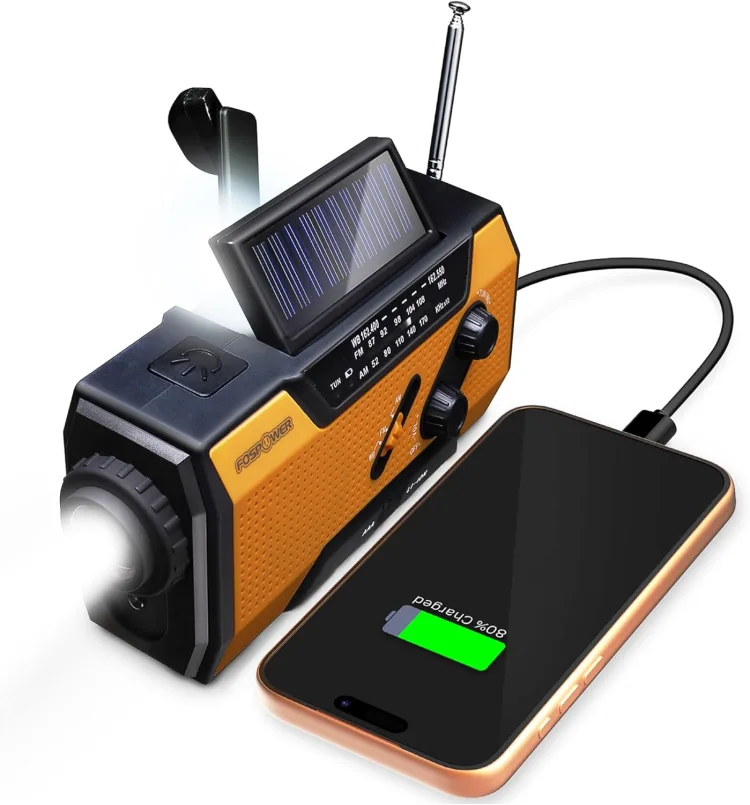
The three power paths
Three ways to stay alive.
They are not equal.
This radio can charge from the wall, from the sun, or from your own arm — and the honest difference between those three is the difference between a plan and a wish. Pick a path. Each one says plainly what it realistically gives you.
Tap one. The panel below shows what it actually delivers — no ratios the listing does not publish.
Wall charge — USB, before the storm
The real reserve.
A full USB charge is what this radio is counting on. It fills the internal cell — 7400mWh on the label, a 2000mAh usable bank — and that is what runs the radio, the reading light, and the flashlight through an outage, with a partial phone top-up left over. Charge it when a storm is named, not when the lights flicker.
Qualitative bar, not a measured rate — it shows which path does the heavy lifting.
This is the path the other two protect. Everything below is a fallback.
Solar — hours of direct sun
A maintenance trickle.
The flip-up panel tops the cell up over hours in direct sun — enough to keep the radio alive and listening through a long outage, never enough to treat as a fast recharge. Cloud cover, window glass, and low winter sun all slow it further. One verified owner ran the radio day and night for five days through a named winter storm on solar — slowly, and that is exactly the point.
Qualitative bar, not a measured rate — real sun varies hour to hour.
Think of it as keeping the reserve from emptying, not filling it.
Hand crank — minutes per minute
An emergency trickle, not a charger.
A minute of cranking buys minutes of radio — enough to catch the next NOAA update and hear the whole band — and only a token amount of phone battery. The listing publishes no crank-to-charge ratio, so this page will not invent one. The crank is what keeps you informed when everything else is dead. It is not what refills your phone.
Qualitative bar, not a measured rate — the listing publishes no crank-to-charge ratio.
The last resort that always works — slowly.
The storm night
Why a broadcast
beats a battery.
A phone is a battery that also happens to receive nothing when the towers congest. This radio receives a broadcast that is still transmitting. That difference is the whole product.
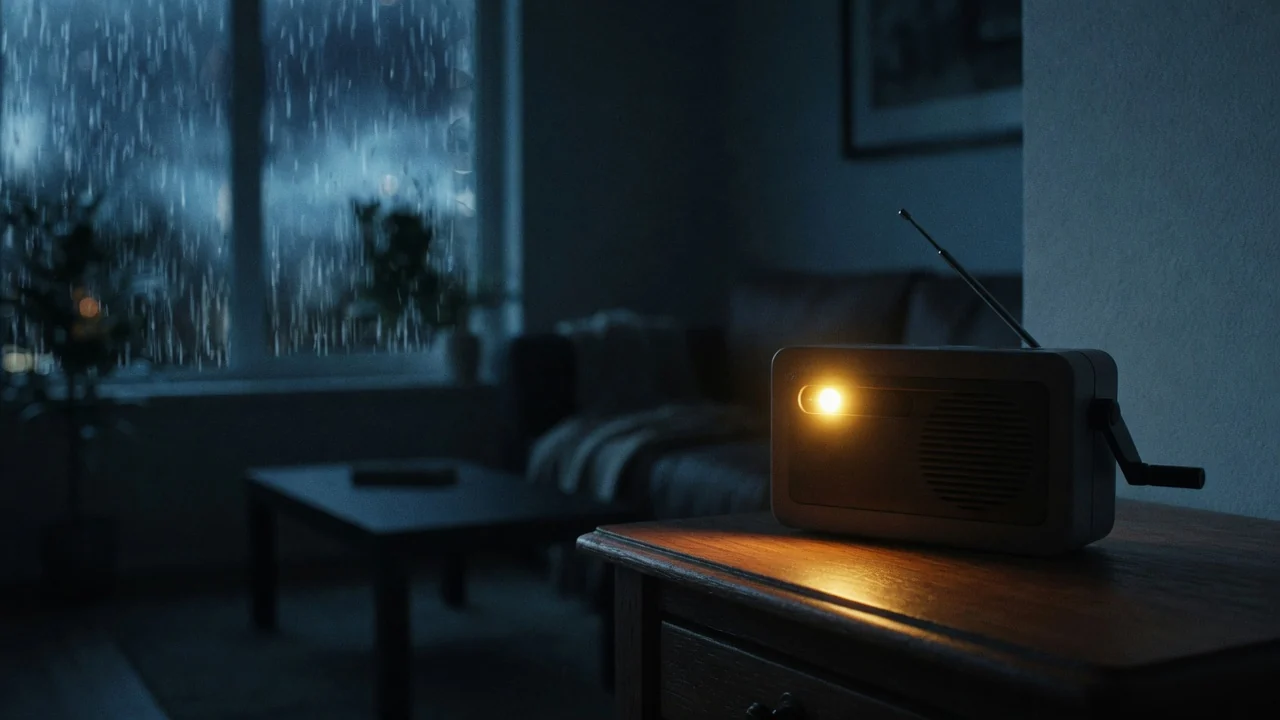
Cold light, rain on the glass, and a cell network everyone in the county is trying to use at the same time.
One small warm pool of light, a voice on the weather band, and a family that knows what the storm is doing.
The towers congest.
In the first hour of a real outage, everyone reaches for their phone at once. The network clogs, the map stops loading, the group chat goes quiet — and your phone becomes a battery with nothing to receive, draining itself as it hunts for a signal.
The transmitter keeps talking.
NOAA weather radio is a broadcast: one transmitter, every receiver in range, no congestion, no login, no data plan. It does not care how many people are listening, and it does not get tired when your phone does.
A broadcast beats a battery.
The radio sips power and just listens — and when its reserve runs low, sunlight or your own arm puts minutes back into it. Knowing what is happening stops depending on anything the grid owes you.
“Used during winterstorm Fern and it held up well. Solar charged, ran radio all day/night for 5 days. Used once to charge a phone, then not again as it ran the battery down quickly. Good tool for the price, came in very handy.”
The tape
37,748 ratings,
passing through.
Verbatim excerpts from the seven verified reviews we harvested — ellipses mark omitted words, nothing reworded. The full reviews, including the 3-star one, are further down.
The standing kit
It lives in a drawer.
That is the point.
Fifty weeks a year this radio does nothing at all. Then the grid quits, the towers jam, and it becomes the only thing in the house still telling you what is happening. That only works if the drawer is ready before the storm is.
- The radio, charged from the wall. The internal cell is the reserve everything else falls back on — top it up when a storm is named.
- AAA batteries beside it, not in it. The radio also runs on removable AAAs. Store them next to the radio so they cannot degrade inside it.
- The boring basics around it. Water, a flashlight you can find in the dark, the things a household actually reaches for. This radio's job in that kit is information — not power.
The twice-a-year habit
When the clocks change, open the drawer: top the radio up from the wall, check the AAAs, put it back. Ten minutes, twice a year. One owner learned why the hard way — and still found the radio itself ready:
“I forgot I put Triple A batteries in it and forgot about it. I should not have left them in there. They needed to be thrown away just now when I went check but what was really amazing the Flash Light worked, it was dim but then I used the hand crank and it began playing FM radio!”
That report is advice, not a defect claim: any emergency device with removable batteries needs the same check. The remarkable part is that nine forgotten months later, the crank still brought the band to life.
Have one before you need one — see the price Check availability →
Straight talk
What a hand crank can
and cannot do for you.
This page exists because this radio is honest about its job — so the page has to be honest about its limits. Three of them, plus the one complaint that lives in the reviews.
The known weakness, quoted verbatim
“Audio is sub-par. RF & power functions seem acceptable; they outweigh the negatives in the audio.”
- Audio is the known weakness. This is a survival radio, not a listening radio. The speaker gets loud enough for a room to hear a broadcast — owners praise the loudness, not the fidelity, and the 3-star review above is the band where the audio complaints live.
- The crank is a trickle. Minutes of radio per minute of cranking, and only a token amount of phone battery. The listing publishes no crank-to-charge ratio — we checked, and we will not invent one.
- The bank is a partial top-up. 7400mWh is the cell rating; the usable bank is 2000mAh — a partial phone top-up, said exactly that way. One storm-tested owner charged a phone once, then not again: it ran the battery down quickly.
- Solar is a maintenance trickle. It tops up over hours in direct sun. It keeps the radio alive; it does not refill anything fast.
- And it is not power. A radio does not run your house, your fridge, or your CPAP. If the night you fear needs actual watts, that is a different tool — this one's job is information.
The spec sheet, with context
What the maker claims —
and what it means.
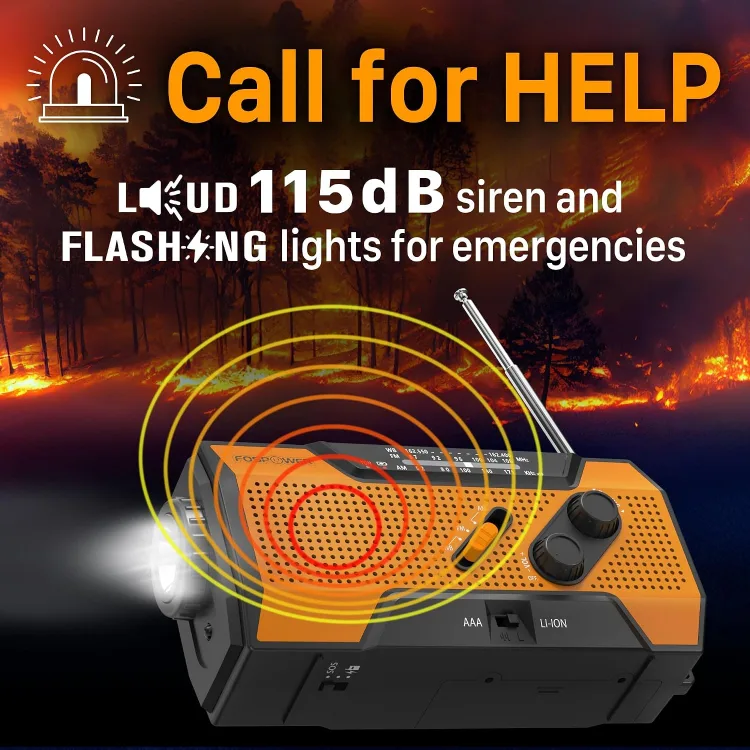
These are FosPower's own listing graphics, shown in supporting roles with the honest reading attached. The claims are real; the scale is what listings leave out.
The reviews
4.6 out of 5.
37,748 ratings deep.
One of the largest review corpuses on this site — and one of the most consistent. Here is the shape of it, then the owners in their own words, including the 3-star review we refuse to hide.
37,748 global ratings
Figures exactly as displayed on the live listing.
The 6 percent three-star band is where the audio complaints live. We left them audible — the 3-star review is on this page, verbatim, twice.
Amazon's own summary, verbatim
“Customers find this emergency radio works well and appreciate its compact size, with one noting it has many bands for emergencies. The device is particularly useful during hurricanes and bad storms, and customers consider it worth the price. They like its portability, with one mentioning it's a great addition to backpack supplies, and praise its sound quality, noting the loud S.O.S feature to attract attention. The charging capability receives mixed reviews - while some say it can charge phones, others report it doesn't work properly.”
AI-generated by Amazon from the text of customer reviews. Note the last sentence: the charging caveat is Amazon's own, and it matches everything above about a partial top-up.
“Audio is sub-par. RF & power functions seem acceptable; they outweigh the negatives in the audio.”
The review this page is built around. Audio is the known weakness; the reception and power functions are why he kept it at three stars, not two.
“I bought this in June 2025, I forgot I put Triple A batteries in it and forgot about it. I should not have left them in there. They needed to be thrown away just now when I went check but what was really amazing the Flash Light worked, it was dim but then I used the hand crank and it began playing FM radio! I will take better care of it! I had bought a case for it and I have it conveniently stored in my home office. It is ready to go! Love it! So, it last at least 9 months! Very loud speaker, ease to use! I am so happy I bought it! Very reliable! Thank you for reminding me I had it! Great Price, well worth it! My sister told me able it!”
34 people found this helpful
“Used during winterstorm Fern and it held up well. Solar charged, ran radio all day/night for 5 days. Used once to charge a phone, then not again as it ran the battery down quickly. Good tool for the price, came in very handy.”
16 people found this helpful
“We live in tornado alley, so this is a must-have for us during tornado season. We keep it in our shelter and it works great when we need it. It gives us peace of mind knowing we have a reliable way to get updates if the power goes out. Pros: reliable, great for emergencies, peace of mind Cons: none for me Would I recommend? Yes—especially if you live in storm-prone areas”
5 people found this helpful
“Great little weather radio at it's price point... It is compact and seems well enough built. It is very easy to operate with the simple dial knobs for volume and tuning. This radio has better reception than the other portable radio I have of another brand, which I appreciate as I live in a more remote area along the coast. If you are looking for an affordable radio to use during a power outage to keep in touch with pending weather, or you could easily carry to the beach or pool, I would recommend you take a look at this one. It does not have shortwave band and being as small as it is don't expect boom box sound quality sound but it performs well for its size.”
37 people found this helpful · one figure elided: the price Hal paid. We never show prices here.
“Surprised and the functionality of this. The tuning of the radio stations is okay, and it seems like a durable piece of equipment to put in your emergency kit. The flashlight works well and it gives you the option to to charge extra things like your phone in case of an emergency.”
2 people found this helpful
“This is a remarkable item that will prove very useful in an emergency situation of power outage. I'm very pleased with the purchase.”
All seven harvested reviews above, verbatim and unedited — stars, typos, and the 3-star included. Rating and histogram are exactly as displayed on the live listing.
The questions people actually ask
Asked cold,
answered straight.
Partially. The internal cell is rated at 7400mWh, which works out to a 2000mAh usable bank — on a modern smartphone that is a partial phone top-up, not a full recharge. One verified owner used it to charge a phone once during a five-day storm outage, then not again, because it ran the radio's battery down quickly. Treat the FosPower Emergency Radio as an emergency sip for a phone, never a refill.
As an emergency trickle, not a charger. Cranking yields minutes of radio per minute of cranking — enough to catch the next NOAA update — and only a token amount of phone battery. FosPower's listing publishes no crank-to-charge ratio, so we will not invent one. The crank is what keeps you informed when everything else is dead; it is not what refills your phone.
Modest. A verified 3-star review of the FosPower Emergency Radio says it plainly: Audio is sub-par. RF & power functions seem acceptable; they outweigh the negatives in the audio. This is a survival radio, not a listening radio — the speaker gets loud enough for a room to hear a broadcast, and owners praise the loudness rather than the fidelity.
The FosPower Emergency Radio receives NOAA weather-band broadcasts plus AM and FM wherever a transmitter reaches. NOAA stations are regional, so reception depends on distance, terrain, and the extended antenna — the same physics as any radio. What reception does not depend on is the cell network: the broadcast is still transmitting when towers are congested. The listing describes a receiver you tune yourself, not an automatic alert monitor.
The radio also runs on removable AAA batteries, but do not store it with them inside. One verified owner left AAAs in the radio for months and found them degraded at the next check — in his own words, I should not have left them in there. Store the batteries beside the radio and check the whole kit twice a year: top up the internal cell from the wall, confirm the AAAs are fresh, put it back.
Neither is a primary source — both are trickles. The solar panel tops the cell up over hours in direct sun, and the crank yields minutes of radio per minute of cranking. The real reserve for the FosPower Emergency Radio is a wall charge before the storm; solar and crank are what keep it alive once the storm is here.
Bought in daylight, out of memory
Buy it on a calm day. Thank yourself on the loud one.
Nobody is excited to buy an emergency radio. Everybody who has needed one says the same sentence. Useless in the drawer fifty weeks a year — until the night it is the only thing in the house still telling you what the storm is doing.
Have one before you need one — see the price Check availability →
Opens Amazon in a new tab. We never show a price here — the live one is always on the listing.