USELESS UNTIL NEEDED · THE SILENT ROOM
You cannot smell the thing this hears.
Carbon monoxide has no colour, no smell, no taste. The only warning a sleeping family gets is the one somebody installed in advance. The First Alert CO400 is that warning: a battery-only sensor and horn that mounts anywhere — because an outlet is exactly what fails on the nights that matter.
Battery-only — one 9V, included per the listing · the maker states an 85 dB alarm, an advanced electrochemical sensor, and a 5-year limited warranty · mounts with two screws, no outlet, no hardwiring.
Reader-supported: we may earn a commission from the Amazon links on this page. It never changes what you pay.
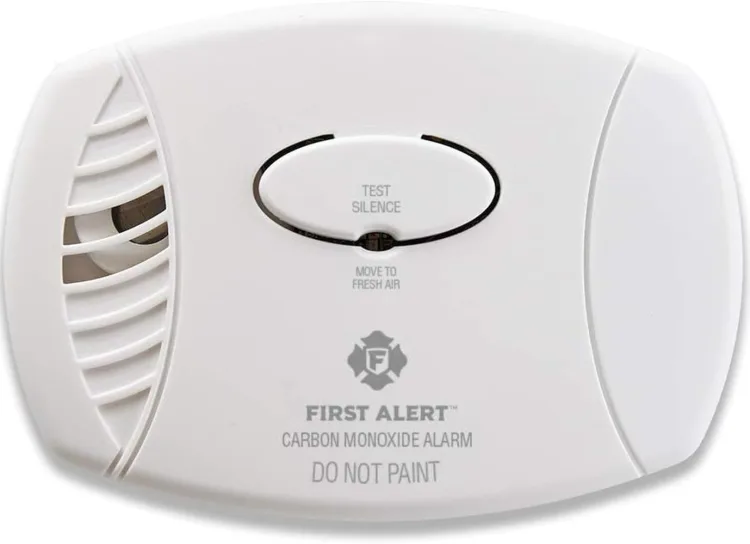
The First Alert CO400, contained on the wall — battery-only, on purpose. The one red point is the whole idea.
The sources map
Five quiet ways
a house makes CO.
None of them announce themselves — that is the whole problem. Tap each numbered point for the honest line on that source. Then the maker's placement rule answers all five at once.
The honest line
1 · The generator
It has to run outside — that is the rule everyone knows. Outage week is when outside quietly becomes “outside, but right under the bedroom window.” Distance is the safety; the alarm on the wall is the backstop.
- The generator. It has to run outside — that is the rule everyone knows. Outage week is when outside quietly becomes “outside, but right under the bedroom window.”
- The gas stove. No leak required: burners and ovens are combustion, and a kitchen can drift while dinner cooks.
- The furnace and water heater. The quietest source in the house runs unattended, all winter, usually a floor below the bedrooms.
- The car in an attached garage. “Just warming it up for a minute” with the door down — a garage shares air with the house, and drywall is not a barrier to a gas.
- Charcoal or propane, brought indoors. The storm-week mistake: the grill or patio heater comes inside “just this once.” Combustion does not care that it is raining.
The maker's placement rule
“To ensure complete protection make sure to place one on each level of your home and in each bedroom.”
That is the listing's own instruction, and it makes the 1-pack the start of coverage, not the end — one unit cannot hear a whole house. The helping fact: battery-only means each detector goes where the rule says, not where the outlet is.
Five sources. One gas. You cannot smell the thing this hears.
The quiet part
CO week and outage week
are the same week.
The classic carbon-monoxide story is not a gas leak on a normal Tuesday. It is the week the grid goes down and the house starts improvising — and this page exists because our outage pages would be incomplete without saying it plainly.
The generator by the window
It has to live outside — but rain and exhaustion move it closer: the porch, the doorway, just under the window. The exhaust does not announce which way it drifted.
The borrowed heater
A propane or kerosene heater somebody lent you for the cold snap. Combustion in a closed room, running low and steady while the house sleeps.
The attached garage
The car warms with the door down “for a minute” because the power is out and the morning is freezing. A garage shares air with the house; drywall is not a barrier to a gas.
3 a.m. The house asleep. One small device on the wall, doing the only job it will ever have — loudly. That sound is the whole product; everything else on this page is a reason to install it in advance.
The voices
23,072 ratings.
Five voices, passing through.
Verbatim reviews from the live listing, names and stars as printed — every one a verified purchase, every one five stars, and Melissa's is the one this page is built around: read her line once and you know more at checkout than she did. Jean, leading the tape, bought two — the placement rule, learned the easy way.
The evidence
The listing's claims,
in the listing's pictures.
Every figure below is the maker's, printed as the maker states it. We did not lab-test a sensor, and this page will not pretend to.
The size on a wall
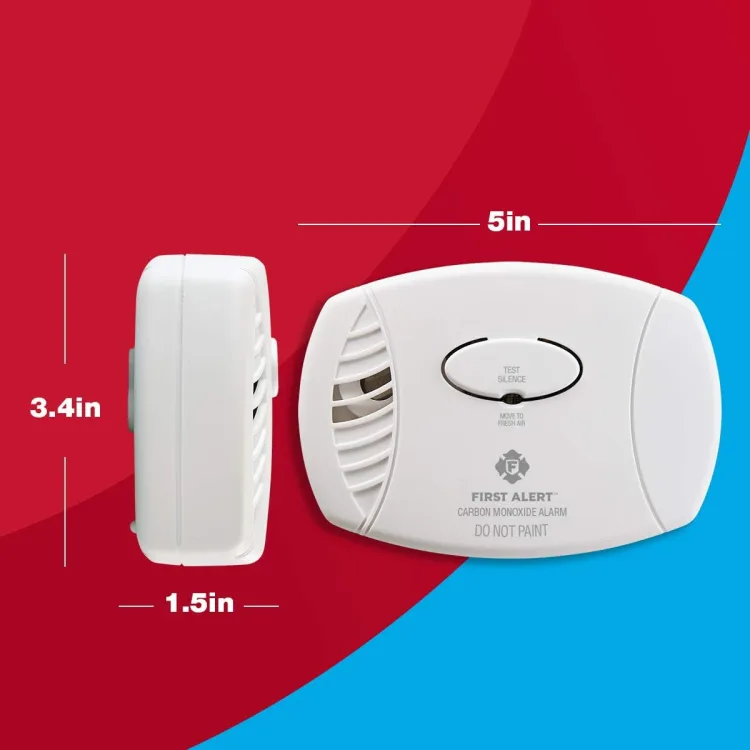
The maker's own graphic reads 5 in wide, 3.4 in tall, 1.5 in deep — smaller than a paperback. The one-per-level-plus-bedrooms rule is a nail or two, not a renovation.

The sensor claim
The listing states an advanced electrochemical carbon monoxide sensor that detects CO “no matter where the detector is placed in the room.” The maker's words, attributed as such — and the marketing image above them is the maker's too.
The test button's other side
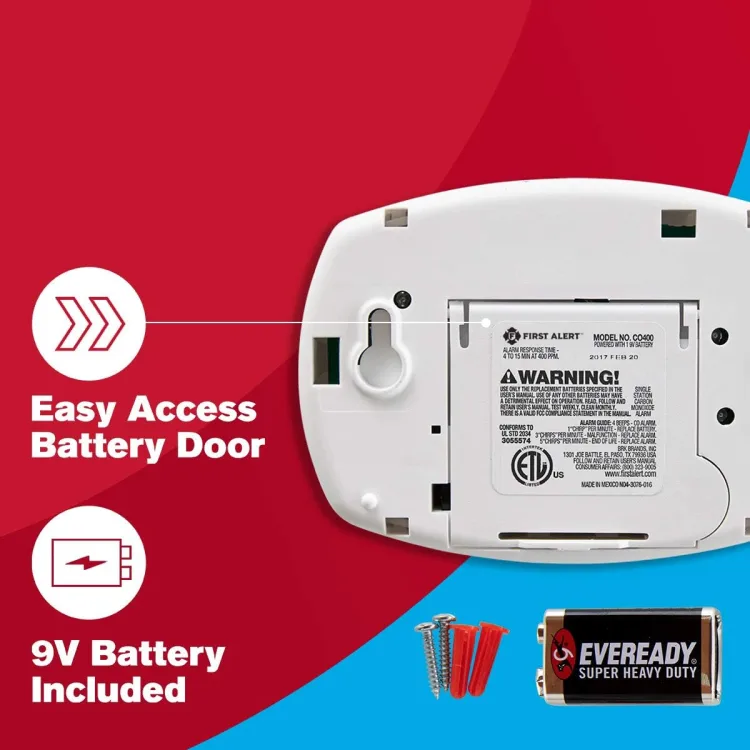
Easy-access battery door, mounting hardware, and a 9V battery in the box — the whole power supply, model label CO400. The front carries the one control that matters: a combined TEST/SILENCE button. Press it the day it lands.
The honest comparison
What it is not —
said plainly.
Three classes get cross-shopped against this one. Here is where the CO400 objectively stands apart from each, and then where it does not.
Not a plug-in
vs outlet-powered CO detectors
An outlet unit dies with the power — and the outage week is the CO week. The generator, the borrowed heater, the dark house: the moments that make carbon monoxide are the moments the grid is down. Battery-only is the point, not a compromise. Melissa's review is the page's clarity: “It does not plug in.” Read it once and buy correctly.
Not a smoke alarm
vs the alarms already on your ceiling
Different sensor, different death. A smoke alarm cannot hear carbon monoxide; this unit cannot hear smoke. Flatly: the CO400 does nothing for fire — it stands beside your smoke alarms, never in their place, and any page that blurs that line is selling you the wrong safety.
Not a smart gadget
vs app-connected combo units
No app, no hub, no firmware, no account. A sensor, a horn, and a battery — the whole architecture. Nothing to update, nothing to go offline, nothing between the gas and the siren but chemistry. At 3 a.m. in a dead house, there is no notification to miss. There is a horn.
Where this class loses — and what 23,072 ratings add
- It tells you nothing about smoke or fire. A CO detector is one sense, not the whole nervous system. Keep the smoke alarms; add this beside them.
- Every CO sensor ages out. That is the chemistry of the class, not a defect. This one at least announces its own end with a chirp, and the maker states a 5-year limited warranty.
- The review corpus carries real caveats. Per Amazon's own summary: battery life and mounting draw mixed notes — some units arrive with a dead battery, and the screw locations differ from older models — and a minority report units failing after about 60 days. Test yours the day it lands; the front button exists for exactly that.
The questions, cold
Asked before
the page existed.
No. The CO400 is battery-only — one 9V battery, included in the box per the listing, is the whole power supply. That is the point, not a compromise: the weeks a CO detector matters most are the outage weeks, when outlet-powered units are dead. One reviewer, Melissa (5 stars), wished she had read the listing better on exactly this point — so this page reads it for you: battery-only, deliberately.
No. The CO400 hears carbon monoxide only. It is not a smoke alarm, and it is not a natural-gas or propane leak detector — those are different sensors for different jobs. Keep your smoke alarms; this unit stands beside them, never in their place.
The maker's placement rule: one on each level of your home and in each bedroom. A single CO400 is the start of coverage, not the whole of it — one 1-pack covers one level, and the bedrooms are their own line items. Because it is battery-only, placement follows the rule instead of the nearest outlet; it mounts on the included screws and anchors.
The maker states 85 decibels. We did not meter it ourselves — that is the listing's figure, attributed as such — and owners in the harvested reviews describe the alarm as loud enough to hear clearly.
Every CO sensor ages out — that is true of the whole class, not a defect of this unit. The CO400 signals its own end of life with a chirp, so the unit itself tells you when it is done, and the maker states a 5-year limited warranty.
Yes, per the listing and the harvested reviews — one verified buyer, Keke (5 stars): came with the batteries. One honest caveat from Amazon's own review summary: a minority of owners report a dead battery on arrival, so test the unit the day it lands — the front button exists for exactly that — and keep a spare 9V in the drawer.
The whole thesis
Buy it hoping
it never speaks.
Nobody is ever glad to hear this alarm. The best outcome is years of silence, then a chirp that only means the sensor has aged out. That is this entire catalog in one object: useless until needed — and on the one night it is needed, the loudest thing in the house.
Install the warning — see today's price Check availability →