Automotive · Car Escape Tool

The ten seconds that matter

A car in water fills in minutes. A belt that will not release and a powered window that died with the engine turn a seat into a trap. The resqme keychain escape tool exists for exactly that moment, and its whole purpose fits in one sentence: cut the belt, break the glass, get out.

4.7 out of 5 · 19,240 global ratings on the live listing
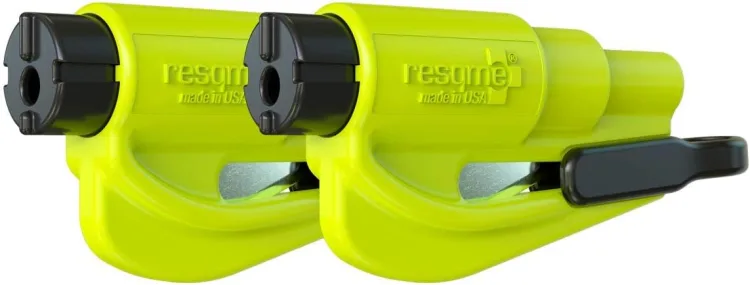
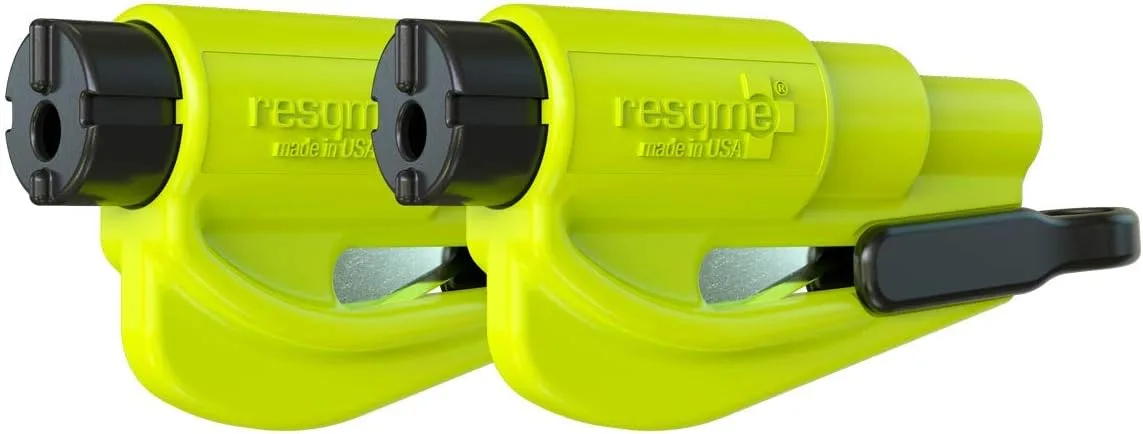
Two safety-yellow resqme keychain escape tools — the pack of two — showing the round punch head and the guarded belt-cutter slot.
The object: a spring-loaded window punch and a guarded seatbelt cutter on a keyring. Pack of two, safety yellow. The maker's photo; the maker states the tool is made in the USA.

01 — Where it lives

A tool you cannot reach does not exist

Every placement in the car passes or fails one test. Tap each spot and read the verdict.

The test: reachable belted · in the dark · upside down · in water?

1 2 3 4

The cabin, from above

REACHABLE

Keychain

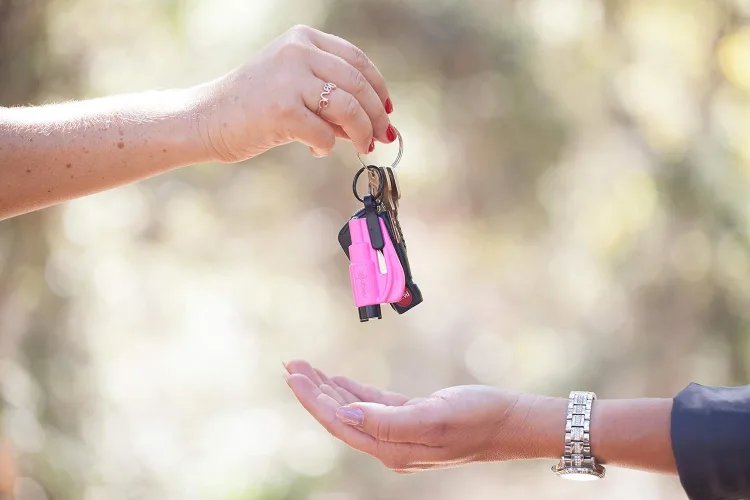
It is already in the ignition, or already in your pocket. Your hand put it there this morning, and your hand finds it again without looking — belted, in the dark, upside down, in water. The only placement that passes the test by default.

The printed conclusion: the tool's entire value is WHERE it waits.

REACHABLE

Keychain

It is already in the ignition, or already in your pocket. Your hand finds it without looking — belted, in the dark, upside down, in water. The only placement that passes the test by default.

REACHABLE — WITH A CONDITION

Visor clip

A visor sits inside a belted arm's reach, and it is still above you when the car is upside down. The condition is honesty: it has to be clipped there today, every day, and the clip has to survive the crash itself. A tool on the visor sometimes is a tool that is nowhere.

MAYBE

Door pocket

An arm's length away on a good day. But a crash scatters everything that is not clipped down, and a submerged door moves its contents. Maybe is not a placement — it is a hope.

NO

Glovebox

Honestly: no. The glovebox is where these tools go to be useless. A closed box on the far side of the cabin — unreachable belted, invisible in the dark, and among the first things to jam in a front impact.

The printed conclusion: the tool's entire value is WHERE it waits.

02 — The underpass

When there is no room to swing

The rain outruns the drains, and the underpass becomes a sump. Water at the sills, then at the glass. A car in water fills in minutes, and the cabin stays almost calm while it happens — that is the trap.

The engine dies, and every powered window dies with it. The belt that protected you at sixty now pins you: loaded by your own weight, its release buried against your hip. In the dark, the seat becomes the thing the news stories describe.

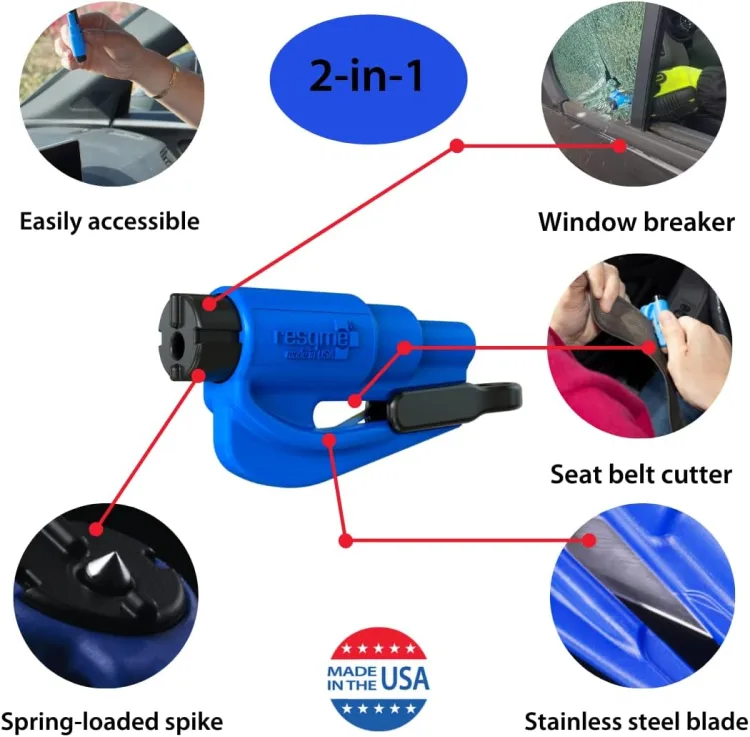
This is why the shape of the tool matters more than its force. There is no room to swing anything inside a flooding cabin — not around the seat, not around the airbag, not around your own body. A spring-loaded point needs no room at all: press it against the corner of the glass and the spring stores and releases the force for you. Pressure, not a swing. That is the whole engineering argument.

The maker documents the technique plainly: the punch goes against a corner or edge of a tempered side window; the cutter works on a taut belt, hooked and pulled. And the sequence fits in the same sentence as the tool:

Cut the belt·break the glass·get out
03 — The voices

What 19,240 drivers say

4.7 out of 5 · 19,240 global ratings · 82% of them five-star. Three voices from the live listing, verbatim, run long rather than padded into six. Hover to hold one still.

"Customers find the emergency keychain to be of top quality, with an ultra-compact design that works well in emergencies and is easy to use, particularly noting the spring-loaded glass breaker mechanism. They appreciate its value as an inexpensive investment in safety and its effectiveness in cutting seatbelts, while also feeling safer having it in their car. The durability receives mixed feedback - while some say it's durable, others report it breaking on the first day of use." Amazon's AI-generated summary of customer reviews — quoted whole, mixed note included

Potentially a Lifesaver

"I wish all vehicles came installed with something similar to the original LifeHammer installed in them from the factory just so everyone has the safety benefit of this little device with them any time they are in their car... I thoroughly believe I'm not exaggerating when I say this device has the potential to save your life or the life of another driver or passenger... Vehicles sink fast and stay sunk."

B. LawsonVerified purchase · 5/5

Works as advertised

"This is a small but potentially seriously valuable tool in case you or someone else is involved in an auto accident... this is not very large and is meant to be used on a keychain, which is likely the best place to keep it because if you are in an accident having access to the key still being in the ignition is more likely than any other place in my opinion... This tool uses a self-loading spring action with a glass breaker spike inside the end of the round part on the bottom. You push the bottom against the glass..."

thomasterribleVerified purchase · 5/5

Nice and compact

"This is a must have in your vehicles in case of an emergency. Very compact and both looks and feels very well made. Definitely Recommend!"

MR HANDYVerified purchase · 5/5

04 — Evidence

Two tools, one honest limit

The maker's own graphics, used as evidence — what the spring-loaded head and the blade slot actually are — and the limit this page refuses to bury.

The laminated-glass limit — read this before you buy

Tempered side windows shatter. Laminated ones do not.

No escape tool of any kind — spring punch, hammer, or otherwise — breaks laminated side glass. Laminated glass is two layers bonded around a plastic interlayer; it cracks and holds. Most older cars use tempered glass for the side windows, which shatters into granules under a spring punch. Many newer cars laminate the front side windows.

Check your own car in ten seconds: look for the small etched mark in a bottom corner of each side window — it will read Tempered or Laminated — or read the label on the door jamb. If your front windows are laminated, place the resqme where a tempered window is the planned exit, and treat the belt cutter as the primary tool. The cutter works regardless of glass type.

05 — Against the rest of the drawer

Same promise, different shape

The escape-tool category is a drawer full of good intentions. Where this one objectively stands apart — and where the entire class loses, stated plainly.

vs the hammer-style breaker

A hammer needs swing room

A hammer stores force in your arm: it needs a backswing, a clear arc, and a firm stance to swing from. Belted into a flooding cabin with the airbag deployed, none of those exist. The resqme stores its force in a spring — press the head to the glass corner and it releases. Same job, no arc required.

vs the knife and the multitool

A blade you must open is a different task

A folding blade is a two-handed object at the worst one-handed moment: opened blind, upside down, with a loaded belt across your chest. The resqme's cutter is a guarded hook that is always in shape — hook the taut belt, pull. Single motion, no opening step, and nothing sharp exposed for the rest of its life on your keyring.

Where this whole class loses

Laminated side glass

No breaker — hammer, punch, or anything else in this category — gets through two glass layers bonded around plastic, and many newer cars laminate the front side windows. We would rather lose the sale than the minute: check the corner etch on your windows before you decide where this tool rides.

06 — Asked cold

The questions people actually ask

No — and this limit belongs to the whole product class, not just the resqme. The spring-loaded punch shatters tempered glass, which is what most older side windows are made of. Laminated glass — two layers bonded around a plastic interlayer — does not shatter under a punch, a hammer, or anything else in this category, and many newer cars laminate their front side windows. Check your own car: find the small etched mark in a bottom corner of the window — it will read Tempered or Laminated — or the label on the door jamb. If your front windows are laminated, place the resqme where a tempered window is the exit, and treat the belt cutter as the primary tool.

Pressure, not a swing. Inside the round head of the resqme is a spring-loaded spike. You press the head firmly against a lower corner of the side window; the spring loads as you push, then releases the spike into the glass. Reviewer thomasterrible describes the same mechanism: a self-loading spring action with a glass breaker spike inside the end of the round part on the bottom — you push the bottom against the glass. Because it needs only pressure, it works belted, in the dark, upside down, and underwater — the moments when there is no room to swing anything.

Yes — cutting a jammed belt is the second of its two tools. The resqme carries a stainless blade guarded inside a narrow slot: hook the slot over the belt webbing and pull across a taut belt. The guard shape means the edge only ever meets the belt, which is what makes the tool safe to carry on a keychain for the rest of its life. The technique the maker documents is a taut belt and a firm pull — and in the moment that matters, the belt is already taut, loaded by your own weight.

On your keychain. Every placement passes or fails one test — can you reach it belted, in the dark, upside down, in water — and reviewer thomasterrible states the case plainly: the keychain is likely the best place to keep it, because after an accident the key still in the ignition is the most reachable point in the car. A visor clip passes if the resqme is clipped there every day. A door pocket is a maybe — a crash scatters whatever is not clipped down. A glovebox is a no: that is where these tools go to be useless.

Yes — underwater is precisely the resqme's case. A swing-dependent tool needs room and a firm stance that a flooding cabin does not offer; the spring-loaded punch needs only pressure against the glass corner, and water does not stop the spring from releasing. The maker's documented sequence is belt first, then glass: cut the belt with the guarded blade, punch a tempered side window, and get out before the car finishes sinking. Vehicles sink fast and stay sunk, as B. Lawson puts it in the review above.

One per car. The resqme only works in the vehicle that is actually in the water, and only if it lives where a belted hand can reach it — a tool in the other car, or in the glovebox, does not exist in that minute. The listing is a pack of two: two cars covered, or one car plus the honest spare for the new driver, handed over with the talk on the day the keys arrive. That is the buying pattern across the 19,240 ratings — parents buying two.

07 — One per car

An object whose whole job is one bad minute

Most things in this store wait for a season. This one waits for a minute — one bad minute it will probably never see. That is the best outcome it sells: clip it to the ring and forget it exists. The listing is a pack of two — two cars covered, or one car plus the spare that goes to the new driver, handed over with the talk, on the day the keys arrive.

One per car. Then never think about it again.

resqme escape tool 4.7 · 19,240 ratings
See today's price